
Reverence & Resistance at St. Johns in the Village
St. John's in the Village is a compact Episcopal church in the West Village, with exposed brick walls, a triptych altarpiece behind the altar, and candles on either side. It isn't a concert hall. The singers stood on the chancel floor, the back wall was the boundary, and I was close enough that a moderate lens covered the whole group, That changes how I work. At a venue like Carnegie Hall I'm shooting from the back of the house through a long lens. Here I could stand a few feet away and still hold the full ensemble in frame.
I photographed Accord Treble Choir's program Reverence & Resistance. I covered the rehearsal, shot headshots of the full ensemble in between, and then photographed the first half of the concert. Being in the room across all three is the thing that made this set what it is. The rehearsal let me figure out where things were happening before the audience arrived, the headshots gave each singer a clean individual frame, and the concert gave me the room as the audience saw it.
Accord is a small ensemble, formed in NYC in 2009, that's built a practice of programming treble choral music that doesn't get performed often, including new work. The afternoon ran nine pieces, among them a world premiere of David Douglas's Pangat Melos, setting a 13th-century Dubliner Troper text, and André Caplet's Messe à Trois Voix from 1920. Reverence & Resistance wasn't a loose theme. It was the actual shape of what they'd put together.
During the rehearsal the singers worked through the Caplet with music in hand. With no audience in the room yet, I could move wherever I wanted without worrying about blocking sightlines or stepping into someone's view, which is its own kind of freedom. The three-voice texture meant I could get a tight frame on two or three faces without losing the sense that more singers were behind them. From stage left at close range, with the altarpiece centered in the background, it compressed well. Faces forward, mouths open, the painted icons soft but readable behind the black fabric. I've found that position reliable for this kind of close work.
Liz Geisewite, who co-founded Accord with Akiko Fuchisawa, conducts the group without a stand between her and the singers, both hands shaping the phrase while she sings along as part of the ensemble. In a room this small there's no barrier between the conductor and the group, and that closeness is easy to catch from a few feet away during the rehearsal.
The wide shot was harder to work out. The ensemble spread across the chancel floor in a loose arc, and from too close the depth collapsed and the back row went flat. I kept working at a distance that held the whole arc without losing the faces nearest me. It's a balance I had to find by trial and error, and the rehearsal was when I found it.
The concert gave me the frame the rehearsal couldn't. With the pews full and the ensemble at the altar, I could work from behind the congregation and place the choir against the full brick wall and altarpiece, heads and shoulders in the foreground. It's a different photograph from the tight rehearsal frames, and it's the one that carries the scale of the afternoon and puts the singers in the room as the audience saw them.
The headshots and group portrait happened in the garden courtyard between the rehearsal and the concert.
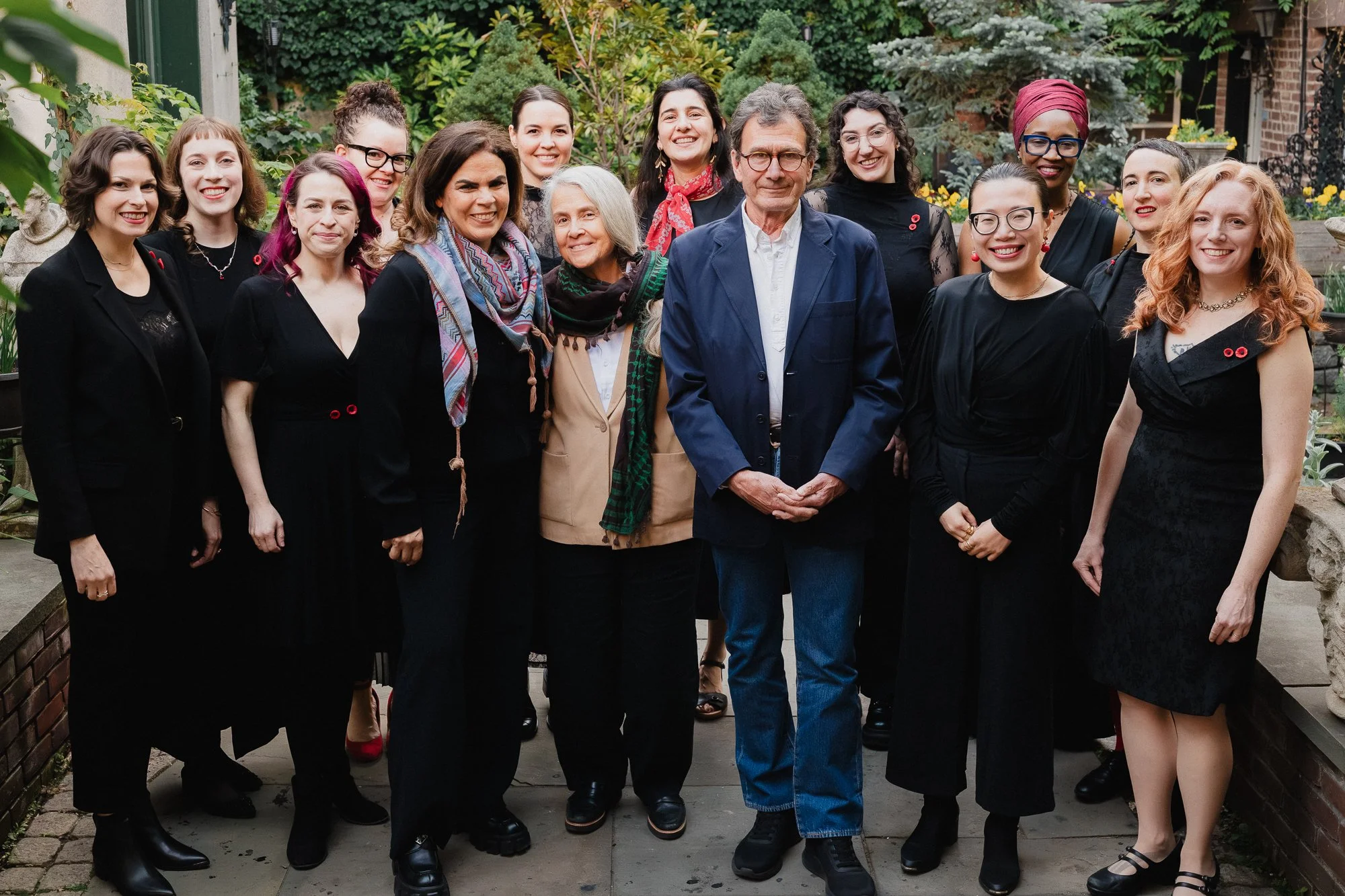
Between those, the rehearsal frames, and the first half of the concert, an ensemble like Accord, with an active commissioning relationship and a residency at St. Ignatius of Antioch, comes away from a single afternoon with material for a season announcement, a grant application, and individual artist portfolios.
If there's a choral concert or premiere on your calendar and you want a photographer who can cover the rehearsal, the singers, and the performance in one afternoon, I'd be glad to talk through what that looks like. A single visit can do more work than most organizations expect. Reach out here.